Nathan Walsh is an artist known for his intricate paintings of cityscapes and urban landscapes that capture contemporary city life. His oil paintings are a unique blend of hyper-realism and abstraction, showcasing the dynamic interaction between architecture and the environment.

Born in 1980, Nathan Walsh is a British painter who creates highly detailed architectural paintings. His work often features a vivid colour palette and meticulous attention to detail. Using oil paint on canvas, he creates sprawling city scenes that explore the complexities of modern urban life.
Walsh creates both familiar yet confusing paintings of cities and buildings that invite the viewer to think about what is really there and what is fake, prompting a deeper reflection on the environments we live and work in.
Walsh frequently paints using a technique that combines clear, defined parts of the city with complex areas of abstraction. This innovative approach allows the viewer to question the relationship between what is truly represented and what has been interpreted.

What do you think is the purpose of mixing realism with abstraction in his work? How does this affect the way you see the urban environment?

Top Facts about Artist Nathan Walsh:
- Walsh was born in Lincoln (UK) in 1971
- He studied at the University of Liverpool and University of Hull
- He now lives and works in a chapel in Wales
- He is known as a contemporary realist painter
- To collect research for his paintings, he often travels to huge cities like New York and Paris two or three times per year
- He uses oil paints and works onto canvas creating large scale pieces
- Some of his paintings are over 2m wide!
- To complete a painting, Walsh can use up to 1000 images as references
- Walsh has exhibited his paintings around the world in places like Miami, Canada, Spain and Australia
- His paintings have been described as ‘an American version of Magic Realism or Marvelous Realism’ – Donald Kuspit
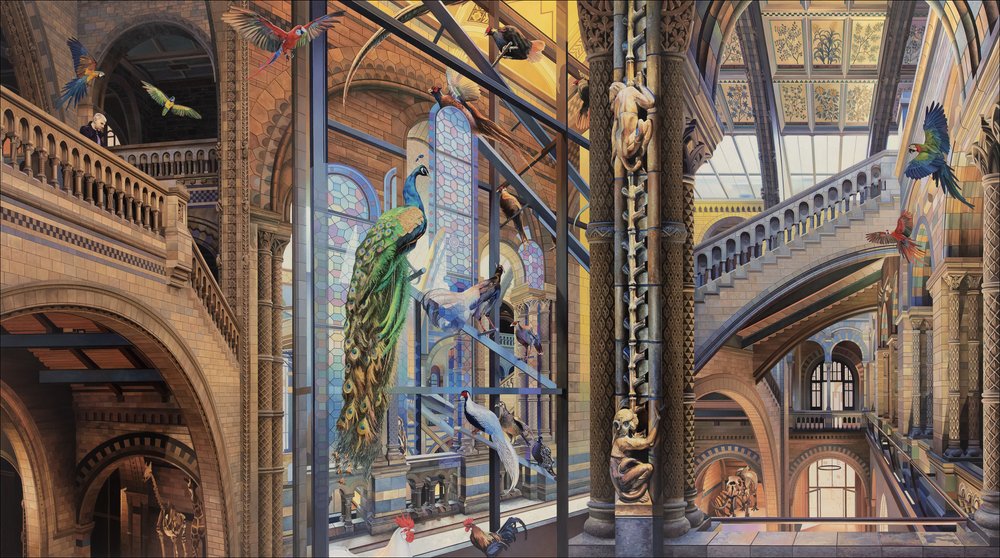
When looking at Walsh’s paintings, you can see the highly detailed, sharp shapes and how light interacts with buildings and streets. His paintings have a wide range of different colours and tones to add depth and realism. The way he uses light and shadow draws the viewer into each scene, making it feel both fantastical and familiar.

Walsh creates a sense of scale in his paintings by focusing on towering skyscrapers and bustling city streets, highlighting unusual perspectives that seem realistic but also have a dream-like quality. Some of the buildings are so big that they cannot fit onto the canvas, whereas others can be seen in full.
In Nathan Walsh’s paintings, it often looks as though we are viewing a city through a window or reflected glass. These reflections might symbolize the confusing nature of city life and how colour and light can affect our sense of reality. The vibrant colors and dynamic compositions create a visual feast that is both engaging and thought-provoking.
The colors and viewpoints in his paintings create a sense of busyness, movement and energy, capturing the city’s vitality. Do you think this gives the viewer an excited or overwhelming feeling?

As you look at the painting ‘Monarch Drift’ above, how many layers of light and shadow do you notice? Is there anything unusual about the composition?
Walsh’s ability to capture the atmosphere of a city during different times of day — whether it’s the soft dawn light or the vibrant glow of dusk — adds a surreal dimension to his work. Lots of artists explore atmosphere in their work in different ways, look at the example below.
You can drag the slider to see the full artworks.
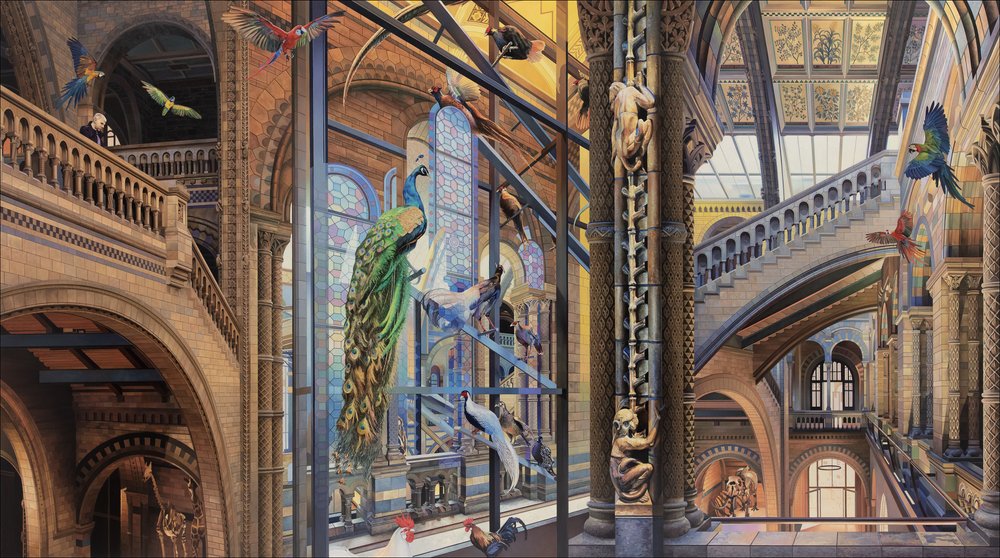

Above are two different works to compare: a painting by Walsh and a print called ‘The Drawbridge’ by an artist called Piranesi. The piece by Piranesi was printed in the 1770s, but can you notice any similarities in both? Can you see any similar shapes or features in Walsh’s work?
To create his oil paintings, Walsh creates highly detailed pencil drawings, using the reference pictures he takes whilst travelling to different cities. He can use up to 1000 reference pictures for his paintings!
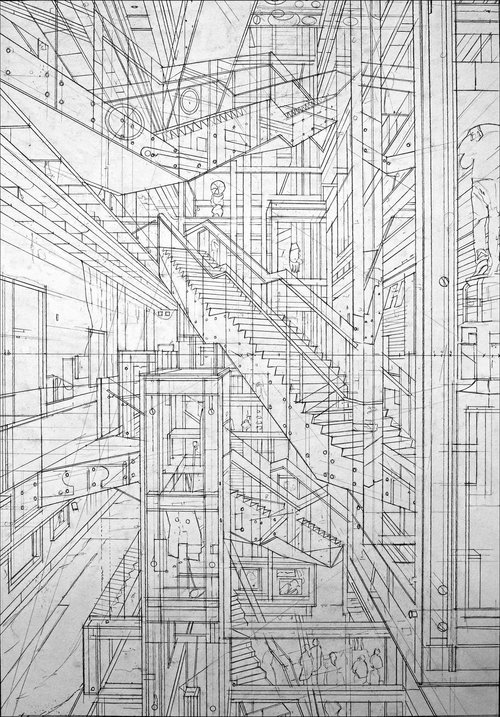
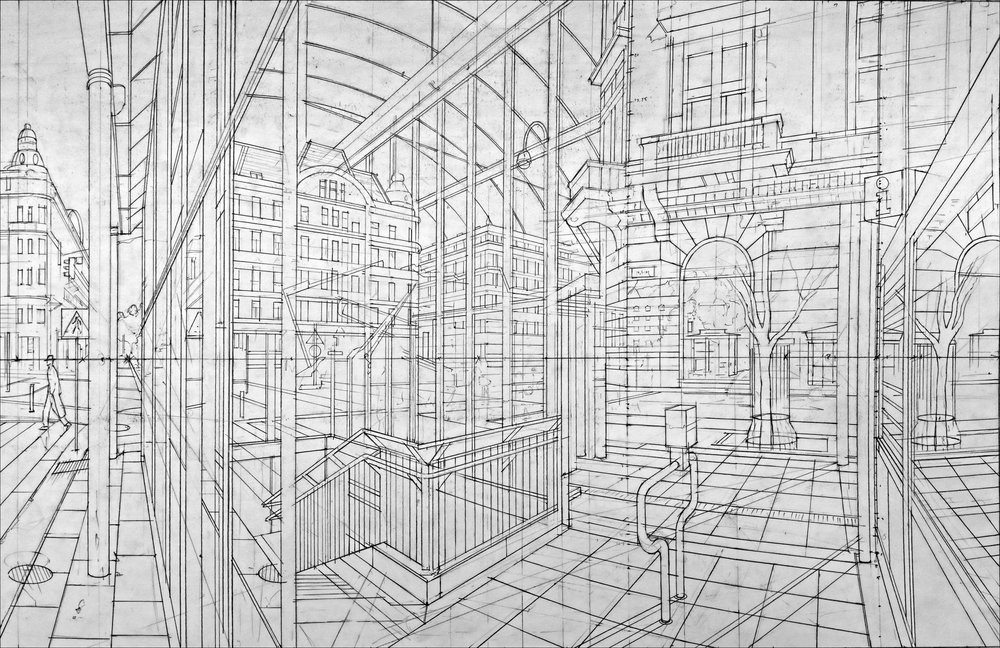

Compare the drawing of Delmonico’s below, to the finished oil painting. How do you think the drawing helps Walsh to create his final piece?
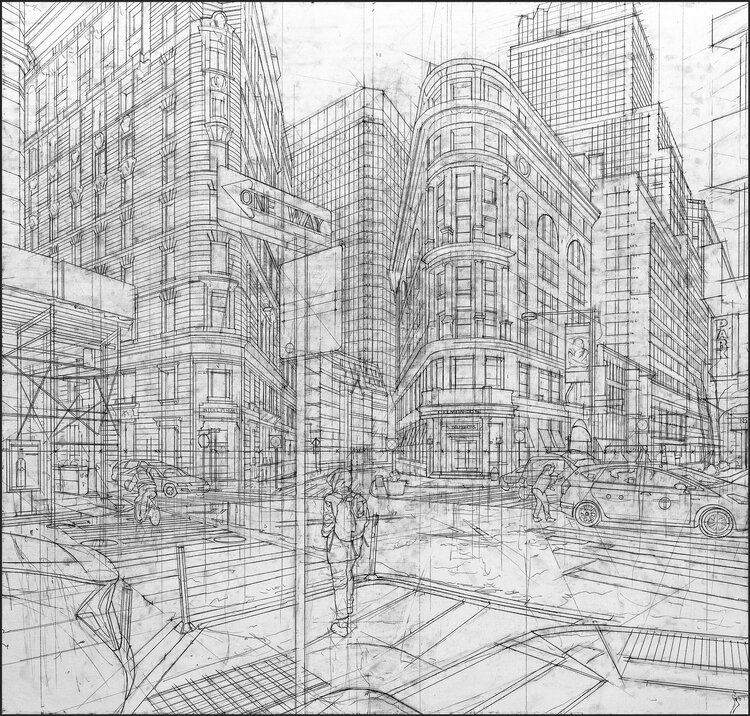

In his work, Walsh says he is
‘…always trying to reach for something new and unexpected, and attempting to push myself further to make something which is more exciting, more dynamic…’
How to create paintings like Nathan Walsh:
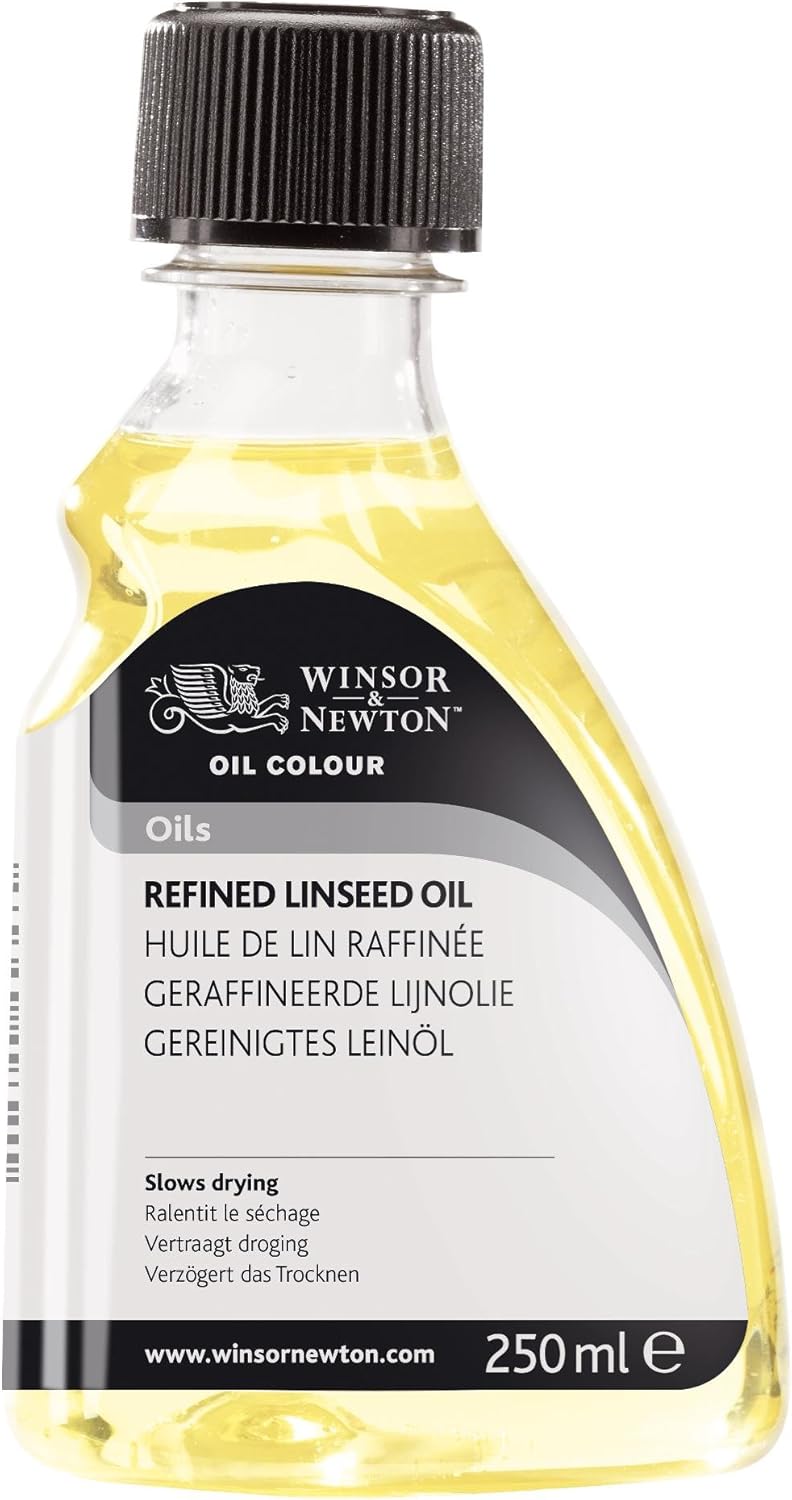
Making such precise and detailed paintings with oil takes years of practice, so get going! Using these materials will help to make your work look professional, and remember to start off small:


To learn more about his work and interests, this short video on Nathan Walsh’s YouTube channel is really helpful:
Walsh also shares further details about his work, process and exhibitions on his popular Instagram page:
What are your thoughts on Nathan Walsh’s artwork? How would you describe his unique style? Let me know in the comments!

