Gordon Cheung is a contemporary multi-media artist from London in the UK. He creates fantastic, strange and colourful mixed-media artworks that blur virtual and actual reality. Cheung uses unusual materials on his landscape paintings such as sand, fabric, sail cloth, newspaper and acrylic gels.
Get art resources sent straight to your email:

Gordon Cheung is a British born, Chinese artist living and working in London. He was born in 1975 and is famous for his incredibly vibrant, detailed and textured paintings and artworks that use cutting edge technology to blur the line between reality and virtual reality.
Gordon Cheung’s modern paintings look otherworldly and often depict strange, surreal and fantastical landscapes with bright areas of colour. His landscape paintings usually show elements that we can recognise such as mountains, architectural features, text or buildings, but he experiments with unusual materials to make them look unfamiliar. Which materials do you think Cheung has used in the painting below?

Top facts about artist Gordon Cheung:
- Gordon Cheung in a multimedia artist who creates paintings, sculptures, prints and NFT artworks
- Cheung was born in London to Chinese parents in 1975
- He lives and works in London, UK
- Cheung graduated with a Bachelor of Fine Arts in Painting in 1998 from Central Saint Martins College of Art and Design
- He earned his Masters of Fine Arts in 2001 from the Royal College of Art
- Cheung has exhibited his artwork around the world, including New York and London
- Museums around the world have bought his artworks, including the MOMA in New York
- Cheung uses new technologies such as virtual reality, to help create his artwork
- Talking about his artwork, Cheung says ‘We perceive the world through mythologies and stories – fictional realities.’
Cheung’s landscape paintings often have a simple composition, with one main focal point that stands out. However, he uses a complex range of materials and builds his paintings up in layers.
Cheung often uses simple compositional arrangements in his landscape paintings. In the painting below, there are four basic sections (the sky, the mountains, the land and the small details near the front) – how do you think using a simple composition creates a sense of balance in his paintings? Although we recognise all of the features in his landscape paintings, they don’t look realistic because of the highly saturated, almost toxic colours. This means we could describe his artwork as surreal. Can you think of 5 other descriptive words?

Gordon Cheung uses colour effectively in his paintings. Cool blues are used against warm reds, oranges and pinks to help draw the viewer’s eye to certain parts of the painting and make elements stand out. Why does the flower at the bottom of the painting above stand out against the background?
If you’d like some help writing your annotations in Art or Photography, look no further.
Open the assistant in a separate window and move it next to your artwork or photograph. Your answers stay with you. Build your own analysis step by step. Use the prompts to make links between what you see, how the artist worked, the mood created and your own ideas. Analyse an artwork using the questions below. Look closely at the artwork and describe what is visible before thinking about its meaning. Describe visible details such as people, objects, setting, colours, shapes and actions. Focus on what you can actually see; save ideas about meaning for later. Sentence starter: Can you be more precise? What details tell you this? Think about the focal point, scale, unusual details and where your eye travels. Sentence starter: Where does your eye move next? How has the artist guided it? Explore the visual language: line, shape, colour, tone, texture, pattern, space, form and composition. Choose the elements you can support with visible evidence. Sentence starter: Can you name a specific area of the artwork as evidence? Look at the overall palette. Consider whether it is warm, cool, limited, complementary, analogous, contrasting, muted or vibrant, and notice where colours appear. Sentence starter: How would you describe the overall palette? Which colours work together or contrast? Is the scheme warm, cool, limited, muted or vibrant, and how does it affect the artwork? Connect two or more choices, such as colour and mood, line and movement, or tone and depth. Sentence starter: Does the colour strengthen the mood, or does another element change the effect? Think about materials, methods and visible evidence of how the artwork may have been made. Use visible clues such as marks, layering, edges, surface and finish. Sentence starter: What visual evidence supports your idea? Could the mark have been made another way? Choose a process you could test in your own sketchbook, rather than simply copy the finished image. Sentence starter: What would you change about the technique to make it your own? Explain the feeling or atmosphere and link it to visible choices. Avoid treating one colour as having only one meaning. Choose precise words, such as tense, calm, energetic, uneasy, playful or lonely. Sentence starter: Could another viewer feel differently? Which details support your interpretation? Look at the whole palette and connect it with tone, composition, subject and marks. Sentence starter: Which parts of the colour scheme help create this mood? Are other features—such as tone, line, texture, shape or composition—also contributing? Could the same palette create a different mood in another artwork? Make clear links between what you noticed and what you plan to do next. Think about an approach, not copying the artist’s exact image. Sentence starter: How could you combine this with an idea, material or subject from your own project? Make your next step specific and practical. Sentence starter: How will you judge whether the experiment worked? What could you change if it does not? Look closely at the photograph. Describe what is visible before interpreting its meaning. Describe the subject, setting, objects, people, gestures and details actually visible in the photograph. Sentence starter: What small detail might another viewer overlook? Identify the focal point and consider framing, viewpoint, foreground and background. Sentence starter: How might a different crop or viewpoint change what you notice? Examine framing, camera angle, focus, depth of field, exposure, contrast, light and colour or monochrome. Consider the crop, rule of thirds, leading lines, symmetry, viewpoint, negative space and the relationship between foreground and background. Sentence starter: What would change if the camera were moved higher, lower or closer? Look at the direction and quality of light, highlights, shadows, contrast and the palette. Black-and-white photographs can be analysed through tonal range. Sentence starter: Could the lighting be natural, artificial or mixed? What evidence supports your answer? Consider focus, depth of field, motion blur, shutter speed and how these direct attention. Do not assume the camera settings are known. Sentence starter: How would a wider depth of field or a faster shutter speed change the image? Investigate how the image might have been captured and produced. Consider digital editing, analogue darkroom techniques and physical alterations made by hand to photographic prints. Use evidence to discuss lens choice, camera position, exposure, shutter speed, aperture, film grain, digital noise or editing. Only claim a method when it is known. Sentence starter: Could this effect have been created in-camera, through digital editing, in the darkroom or by physically altering a print? What evidence can you see? Consider digital adjustments and retouching; analogue darkroom methods such as dodging, burning and photograms; and physical editing by hand, such as cutting, tearing, folding, stitching, scratching, collage, drawing, painting or layering onto a printed photograph. Only describe methods as facts when you have evidence. Sentence starter: Compare digital editing, darkroom manipulation and editing a print by hand. How might stitching, collage, scratching or painting onto the photograph change its meaning or mood? Interpret the photograph, supporting your ideas with visible evidence rather than assumptions. Use precise language and connect it to light, tone, framing, focus and subject matter. Sentence starter: Could a different viewer interpret the same image differently? Why? Consider context, storytelling, documentary or staged approaches, and what is included or excluded by the frame. Distinguish observation from interpretation. Sentence starter: What might be happening outside the frame? How does that affect your interpretation? Turn your analysis into a practical experiment for your own photography. Choose a compositional or technical approach to explore, rather than copying the photograph. Sentence starter: How could you achieve a similar effect with either a digital camera or analogue film? Plan your subject, location, framing and light, then decide whether to edit digitally, experiment in the darkroom or alter a physical print by hand. Explain how you will compare results. Sentence starter: How could you develop one photograph further through digital editing, darkroom techniques or cutting, stitching, collage or drawing on a print? Read, edit and connect your ideas. This is a draft, so make sure it reflects what you actually observed and thought. Spelling support applies common corrections across answer boxes and the final draft, alongside your browser’s English spell checker. Always check suggested changes. Feedback helps you develop your own ideas; it does not grade your work.GCSE Art Annotation Assistant
Content
Challenge question
Challenge question
Form
Challenge question
Challenge question
Challenge question
Process
Challenge question
Challenge question
Mood
Challenge question
Challenge question
Your Response
Challenge question
Challenge question
Content
Challenge question
Challenge question
Composition and Light
Challenge question
Challenge question
Challenge question
Photographic Process
Challenge question
Challenge question
Mood and Meaning
Challenge question
Challenge question
Your Photographic Response
Challenge question
Challenge question
Your annotation

Gordon Cheung uses lots of different materials in his work, giving his paintings a tactile, layered quality. In the sky on the painting above, we can see square and rectangle shapes that have all been painted over. The background is a collage made up of newspaper cuttings from financial stocks and shares data, do you think that by adding symbolic elements, Cheung could be trying to share a message through his artwork? As well as newspapers, Cheung paints with spray paints, sand and acrylic – each of which gives him scope to create a range of different textures.
Look at the artwork by Gordon Cheung below, how has he used scale and colour to create a sense of perspective? The mountains are a pale yellow and orange, shrouded in a light mist. The bridge on the right hand side is smaller in the distance then gets bigger towards the front, and the tree trunk on the left is highly detailed and much bigger than the mountains. This gives the impression that the painting has a lot of depth, and moves off into the distance. The colours at the front of the painting are also brighter, and the details on the green land are clearer to see.


Gordon Cheung is famous for his rich, detailed and highly textured paintings which have features and elements that look almost recognisable. He uses bright, vivid colours and different media to add a range of surfaces. He paints onto different backgrounds such as newsprint and sand to create his sci-fi style artworks, some of which look like they have come straight from a video game!
Teaching Gordon Cheung? This free interactive artist research quiz helps art students explore Gordon Cheung’s symbolism and portraiture through knowledge questions, close looking, artwork comparisons and a creative drawing activity. Suitable for art lessons or independent study.
Gordon Cheung
Art Detective Quiz
Explore the artwork, follow the clues and make something of your own.

Have you REALLY finished this whole quiz in less than 15 minutes?!
Think about your written responses and your artwork before deciding.
There's still time to improve your work!
Use this time to check your answers and add more detail to your drawing. The 15 minutes is a minimum, not a deadline. Take longer if you need to.
Watch the short clip below to find out how Cheung creates his textures and effects in his paintings:
How to create artwork like Gordon Cheung:
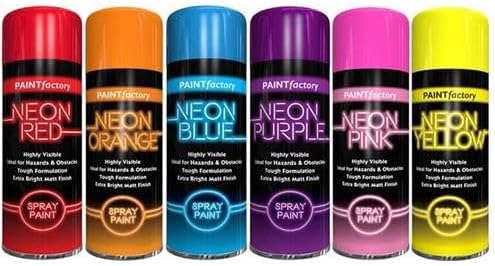
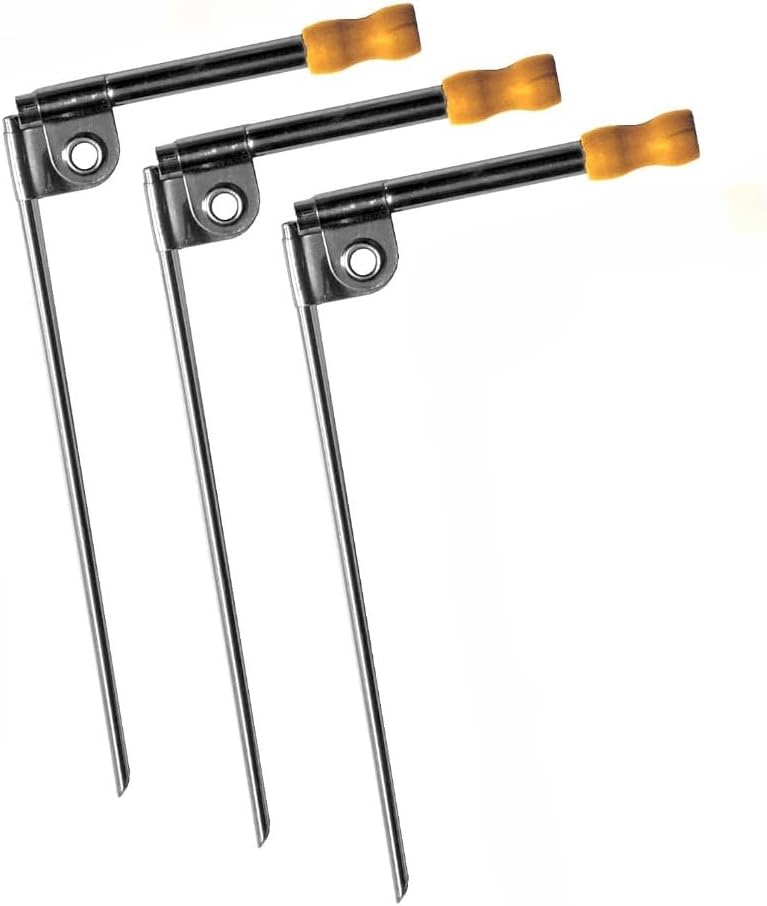
Here are the materials I would suggest to use to create paintings like Gordon Cheung. Spray paint alternatives (such as diffusers) can still give the same effect if used properly.

As well as contemporary landscape paintings, Cheung creates portraits and has a series of paintings inspired by natural forms such as plants and flowers.


What do you think of Gordon Cheung’s artwork? How could you describe it? Which is your favourite piece and why? Let me know in the comments!

Very interesting stuff.
Art