Artist Francoise Nielly is a portrait painter who uses a knife instead of a paint brush. Francoise Nielly’s artworks are vibrant, vivid and striking portraits of very famous people. Even though Nielly’s technique is to use a knife to make her paintings, the faces are still very intricate and detailed.


Who is Francoise Nielly?
Francoise Nielly is a French artist who was born in Marseille in 1960. Her father was an architect so she has been drawing since she was a child and her artworks can sell for over £10,000! She often paints faces of celebrities and some of her favourite artists are Jean-Michel Basquiat, Hans Hartung, Giovanni Boldini, Lucian Freud, Paul Klee, Willem de Kooning, Philipe Pasqua, Jenny Saville, Damien Hirst and Maurizio Cattelan.


How does Francoise Nielly paint?
Francoise Nielly uses a palette knife to paint her portraits with. This technique means the famous faces have a range of textures and marks on them, almost looking like parts have been cut away to reveal other colours below.

When you look at Francoise Nielly’s portrait paintings, the first thing we see is the vibrant use of colour. We also notice the composition, or layout, of her paintings; the faces Nielly paints are a huge scale (size) and the artist often uses a close-up angle to paint from. The large, colourful and confident use of her palette knife make her paintings very dynamic, energetic and active.
Click here if you want my art lessons explaining how to draw portraits!

I have shared a list of portrait artists here – enjoy!

How would you describe the marks you can see on Francoise Nielly’s paintings? Do you think she uses fast, quick motions with her knife or works slowly? Why? Can you see where the edge of the palette knife has been put on the canvas?
If you’d like some help writing your annotations in Art or Photography, look no further.
Build your own analysis step by step. Use the prompts to make links between what you see, how the artist worked, the mood created and your own ideas. Look closely at the artwork and describe what is visible before thinking about its meaning. Describe visible details such as people, objects, setting, colours, shapes and actions. Focus on what you can actually see; save ideas about meaning for later. Sentence starter: Can you be more precise? What details tell you this? Think about the focal point, scale, unusual details and where your eye travels. Sentence starter: Where does your eye move next? How has the artist guided it? Explore the visual language: line, shape, colour, tone, texture, pattern, space, form and composition. Choose the elements you can support with visible evidence. Sentence starter: Can you name a specific area of the artwork as evidence? Look at the overall palette. Consider whether it is warm, cool, limited, complementary, analogous, contrasting, muted or vibrant, and notice where colours appear. Sentence starter: How would you describe the overall palette? Which colours work together or contrast? Is the scheme warm, cool, limited, muted or vibrant, and how does it affect the artwork? Connect two or more choices, such as colour and mood, line and movement, or tone and depth. Sentence starter: Does the colour strengthen the mood, or does another element change the effect? Think about materials, methods and visible evidence of how the artwork may have been made. Use visible clues such as marks, layering, edges, surface and finish. Sentence starter: What visual evidence supports your idea? Could the mark have been made another way? Choose a process you could test in your own sketchbook, rather than simply copy the finished image. Sentence starter: What would you change about the technique to make it your own? Explain the feeling or atmosphere and link it to visible choices. Avoid treating one colour as having only one meaning. Choose precise words, such as tense, calm, energetic, uneasy, playful or lonely. Sentence starter: Could another viewer feel differently? Which details support your interpretation? Look at the whole palette and connect it with tone, composition, subject and marks. Sentence starter: Which parts of the colour scheme help create this mood? Are other features—such as tone, line, texture, shape or composition—also contributing? Could the same palette create a different mood in another artwork? Make clear links between what you noticed and what you plan to do next. Think about an approach, not copying the artist’s exact image. Sentence starter: How could you combine this with an idea, material or subject from your own project? Make your next step specific and practical. Sentence starter: How will you judge whether the experiment worked? What could you change if it does not? Read, edit and connect your ideas. This is a draft, so make sure it reflects what you actually observed and thought. Spelling support applies common corrections across answer boxes and the final draft, alongside your browser’s English spell checker. Always check suggested changes. Feedback helps you develop your own ideas; it does not grade your work.GCSE Art Annotation Assistant
Content
Challenge question
Challenge question
Form
Challenge question
Challenge question
Challenge question
Process
Challenge question
Challenge question
Mood
Challenge question
Challenge question
Your Response
Challenge question
Challenge question
Your annotation


Why do you think Francoise Nielly uses such bright and bold colours in her paintings of famous celebrities?
In her paintings, Francoise Nielly builds her portraits with layers and layers of oil paint (a bit like building a cake!) As you look closer, you can start to see how all of the layers of paint have been slashed and scraped, allowing the colours below to show through. In her paintings of famous faces, Nielly makes use of contrasting (complementary) colours. When colours opposite each other on the colour wheel are placed next to each other, the brightness intensifies and makes a strong contrast. Neilly uses fluorescent paints which glow in the dark, as well as using oil paints also helps to achieve a rich, intense finish.
Have a look at the portrait painting above, Nielly has made use of both warm and cool colours to enhance the highlights and shadows of the face. This means the facial features have an element of realism, even though her painting is expressive. As well as using cool colours for shadows, and warm colours for highlights, Nielly mixes a range of tones. This means her ‘dark’ areas on the faces are usually just as colourful as the light parts – clever!
Teaching Francoise Nielly? This free interactive artist research quiz helps art students explore Francoise Nielly’s portraiture and drawing techniques through knowledge questions, close looking, artwork comparisons and a creative drawing activity. Suitable for art lessons or independent study.
Francoise Nielly
Art Detective Quiz
Explore the artwork, follow the clues and make something of your own.

Have you REALLY finished this whole quiz in less than 15 minutes?!
Think about your written responses and your artwork before deciding.
There's still time to improve your work!
Use this time to check your answers and add more detail to your drawing. The 15 minutes is a minimum, not a deadline. Take longer if you need to.
What materials do you need to create artwork like Francoise Nielly?
Here are the materials I recommend for you to make artworks like Francoise Nielly. Using oil paints for this type of work will give you rich colours and a textured finish on your work. Choose palette knives with a range of different edges to create different effects in your work. I recommend thinning out your oil paints with a quality linseed oil.

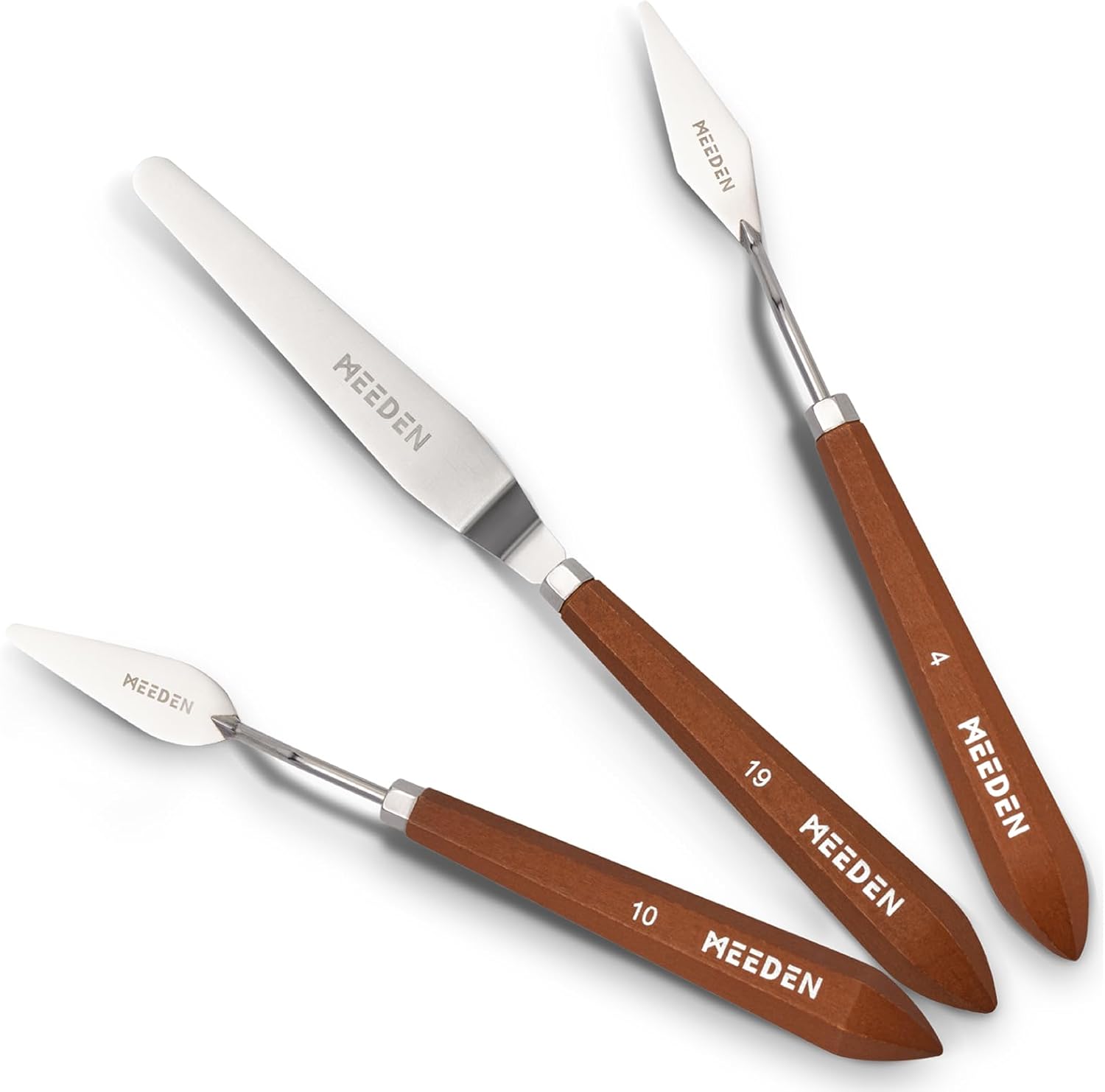

Watch the interview with Francoise Nielly for more information about her work. Can you see what else she paints onto (as well as canvas)? What does Nielly say she is inspired by?
What do you think of Francois Nielly’s artwork? How could you describe it? Let me know in the comments! If you have found any of these resources useful please share this site on your networks / socials – thanks! 🙂
DOWNLOAD this page below, for free, as an Artist Research handout to use in your lesson. It includes all of the facts and images, and has questions for students to answer.

Impressive!!!
Wow I’ve just come across your site and it’s amazing thank you for all the sharing it’s very much appreciated and inspiring
Thanks so much 🙂
What an amazing resource and so much hard work put into it. Thank you so much for sharing it 😊💕
Thanks for your lovely comment, and you are welcome! Glad it was useful for you.
Very inspirational, I can’t wait to start to learn how to paint like this!!!!!