Yayoi Kusama is a world famous Japanese artist who works in a range of different media. Kusama mostly creates highly decorative, patterned sculptures and installations inspired by natural forms and Pop Art. However, she also makes paintings, films, fashion pieces and performance art.


Get art resources sent straight to your email:
Yayoi Kusama is a Japanese artist who was born in 1929 – can you work out how old she is? Kusama is sometimes referred to as the ‘princess of polka dots’, and if you look at any of her artwork you can easily see why… Yayoi Kusama is dotty about dots!
What words could you use to describe the pumpkin sculpture? Try to think of 5 different words.

Yayoi Kusama is a very versatile artist, meaning she creates artworks which are completely different from each other. Even though she sometimes makes artwork inspired by natural or organic forms such as food, or animals, or makes clothing instead of a painting, Kusama has an instantly recognisable style thanks to her use of bright, vivid colours and dots.
10 Important facts about Yayoi Kusama:
- Kusama was born on 22nd March 1929
- She is Japanese
- Her artwork can be described as Pop Art, Minimalist, Abstract and Surreal
- Kusama is trained in a traditional Japanese painting style called nihonga
- Yayoi Kusama’s mother did not support her artistic creativity
- She has been open about her mental health, voluntarily living in a hospital for the mentally ill and saying that making art has become a way to express her mental illness.
- Her dotty artwork is inspired by hallucinations she had as a child (fields of flowers would talk to her!)
- Aged 27, Kusama moved from Japan to New York in America and was influenced by the Pop Art movement throughout the 1960’s.
- In an interview about her mental health, Yayoi Kusama said “I fight pain, anxiety, and fear every day, and the only method I have found that relieved my illness is to keep creating art.”
- In August 2021, her pumpkin sculpture got washed into the sea during a tropical storm – it had been there since 1992!

Yayoi Kusama is an abstract artist and her artwork can be described as pop art; it has bright, flat colours and simple patterns added over the top. Abstract artists often make use of pattern in different ways – to confuse the viewer or make their work more complicated. We know that Kusama is often inspired by natural forms objects such as food (the shape of pumpkins or mushrooms is obvious, but she also uses pattern and colour to make her work more abstract).
Kusama always uses dots in her work and the use of dots in different sizes makes the artwork exciting and fun to look at. Each of the dots has been very carefully drawn with paint pens, painted or printed and they are all drawn precisely. Repeating simple shapes carefully is a clever way of making successful pattern work. Most of Kusama’s art only has one colour, meaning they have a monochromatic colour scheme.
Look at the Pumpkin artwork above – why do you think Kusama fills the whole space with colour and patterns? Why do you think she has not left any white or blank spaces?
If you’d like some help writing your annotations in Art or Photography, look no further.
Open the assistant in a separate window and move it next to your artwork or photograph. Your answers stay with you. Build your own analysis step by step. Use the prompts to make links between what you see, how the artist worked, the mood created and your own ideas. Analyse an artwork using the questions below. Look closely at the artwork and describe what is visible before thinking about its meaning. Describe visible details such as people, objects, setting, colours, shapes and actions. Focus on what you can actually see; save ideas about meaning for later. Sentence starter: Can you be more precise? What details tell you this? Think about the focal point, scale, unusual details and where your eye travels. Sentence starter: Where does your eye move next? How has the artist guided it? Explore the visual language: line, shape, colour, tone, texture, pattern, space, form and composition. Choose the elements you can support with visible evidence. Sentence starter: Can you name a specific area of the artwork as evidence? Look at the overall palette. Consider whether it is warm, cool, limited, complementary, analogous, contrasting, muted or vibrant, and notice where colours appear. Sentence starter: How would you describe the overall palette? Which colours work together or contrast? Is the scheme warm, cool, limited, muted or vibrant, and how does it affect the artwork? Connect two or more choices, such as colour and mood, line and movement, or tone and depth. Sentence starter: Does the colour strengthen the mood, or does another element change the effect? Think about materials, methods and visible evidence of how the artwork may have been made. Use visible clues such as marks, layering, edges, surface and finish. Sentence starter: What visual evidence supports your idea? Could the mark have been made another way? Choose a process you could test in your own sketchbook, rather than simply copy the finished image. Sentence starter: What would you change about the technique to make it your own? Explain the feeling or atmosphere and link it to visible choices. Avoid treating one colour as having only one meaning. Choose precise words, such as tense, calm, energetic, uneasy, playful or lonely. Sentence starter: Could another viewer feel differently? Which details support your interpretation? Look at the whole palette and connect it with tone, composition, subject and marks. Sentence starter: Which parts of the colour scheme help create this mood? Are other features—such as tone, line, texture, shape or composition—also contributing? Could the same palette create a different mood in another artwork? Make clear links between what you noticed and what you plan to do next. Think about an approach, not copying the artist’s exact image. Sentence starter: How could you combine this with an idea, material or subject from your own project? Make your next step specific and practical. Sentence starter: How will you judge whether the experiment worked? What could you change if it does not? Look closely at the photograph. Describe what is visible before interpreting its meaning. Describe the subject, setting, objects, people, gestures and details actually visible in the photograph. Sentence starter: What small detail might another viewer overlook? Identify the focal point and consider framing, viewpoint, foreground and background. Sentence starter: How might a different crop or viewpoint change what you notice? Examine framing, camera angle, focus, depth of field, exposure, contrast, light and colour or monochrome. Consider the crop, rule of thirds, leading lines, symmetry, viewpoint, negative space and the relationship between foreground and background. Sentence starter: What would change if the camera were moved higher, lower or closer? Look at the direction and quality of light, highlights, shadows, contrast and the palette. Black-and-white photographs can be analysed through tonal range. Sentence starter: Could the lighting be natural, artificial or mixed? What evidence supports your answer? Consider focus, depth of field, motion blur, shutter speed and how these direct attention. Do not assume the camera settings are known. Sentence starter: How would a wider depth of field or a faster shutter speed change the image? Investigate how the image might have been captured and produced. Consider digital editing, analogue darkroom techniques and physical alterations made by hand to photographic prints. Use evidence to discuss lens choice, camera position, exposure, shutter speed, aperture, film grain, digital noise or editing. Only claim a method when it is known. Sentence starter: Could this effect have been created in-camera, through digital editing, in the darkroom or by physically altering a print? What evidence can you see? Consider digital adjustments and retouching; analogue darkroom methods such as dodging, burning and photograms; and physical editing by hand, such as cutting, tearing, folding, stitching, scratching, collage, drawing, painting or layering onto a printed photograph. Only describe methods as facts when you have evidence. Sentence starter: Compare digital editing, darkroom manipulation and editing a print by hand. How might stitching, collage, scratching or painting onto the photograph change its meaning or mood? Interpret the photograph, supporting your ideas with visible evidence rather than assumptions. Use precise language and connect it to light, tone, framing, focus and subject matter. Sentence starter: Could a different viewer interpret the same image differently? Why? Consider context, storytelling, documentary or staged approaches, and what is included or excluded by the frame. Distinguish observation from interpretation. Sentence starter: What might be happening outside the frame? How does that affect your interpretation? Turn your analysis into a practical experiment for your own photography. Choose a compositional or technical approach to explore, rather than copying the photograph. Sentence starter: How could you achieve a similar effect with either a digital camera or analogue film? Plan your subject, location, framing and light, then decide whether to edit digitally, experiment in the darkroom or alter a physical print by hand. Explain how you will compare results. Sentence starter: How could you develop one photograph further through digital editing, darkroom techniques or cutting, stitching, collage or drawing on a print? Read, edit and connect your ideas. This is a draft, so make sure it reflects what you actually observed and thought. Spelling support applies common corrections across answer boxes and the final draft, alongside your browser’s English spell checker. Always check suggested changes. Feedback helps you develop your own ideas; it does not grade your work.GCSE Art Annotation Assistant
Content
Challenge question
Challenge question
Form
Challenge question
Challenge question
Challenge question
Process
Challenge question
Challenge question
Mood
Challenge question
Challenge question
Your Response
Challenge question
Challenge question
Content
Challenge question
Challenge question
Composition and Light
Challenge question
Challenge question
Challenge question
Photographic Process
Challenge question
Challenge question
Mood and Meaning
Challenge question
Challenge question
Your Photographic Response
Challenge question
Challenge question
Your annotation


I have shared a list of other artists inspired by food here – enjoy!
Kusama works in lots of different ways, sometimes she creates paintings or drawings, sometimes clothing and sometimes she decides to create installation artworks. Installations are artworks that fill a whole room / space that visitors can walk around in and experience. Yayoi Kusama is very famous for creating installations called Infinity Mirror Rooms. These are huge rooms, filled with vibrant colours / shapes / dots / objects that have mirrors on each wall. The use of mirrors toys with the viewer’s perspective and creates an illusion of infinity.
Talking about her Infinity Mirror Rooms, Kusama said, “The effect of infinite, constant repetition leads us to finding our ever-expanding hope.”
Watch the clip about Yayoi Kusama below – what materials can you see Yayoi Kusama use to make her work? What are the most interesting facts about her life?
Teaching Yayoi Kusama? This free interactive artist research quiz helps art students explore Yayoi Kusama’s sculpture and drawing techniques through knowledge questions, close looking, artwork comparisons and a creative drawing activity. Suitable for art lessons or independent study.
Yayoi Kusama
Art Detective Quiz
Explore the artwork, follow the clues and make something of your own.

Have you REALLY finished this whole quiz in less than 15 minutes?!
Think about your written responses and your artwork before deciding.
There's still time to improve your work!
Use this time to check your answers and add more detail to your drawing. The 15 minutes is a minimum, not a deadline. Take longer if you need to.
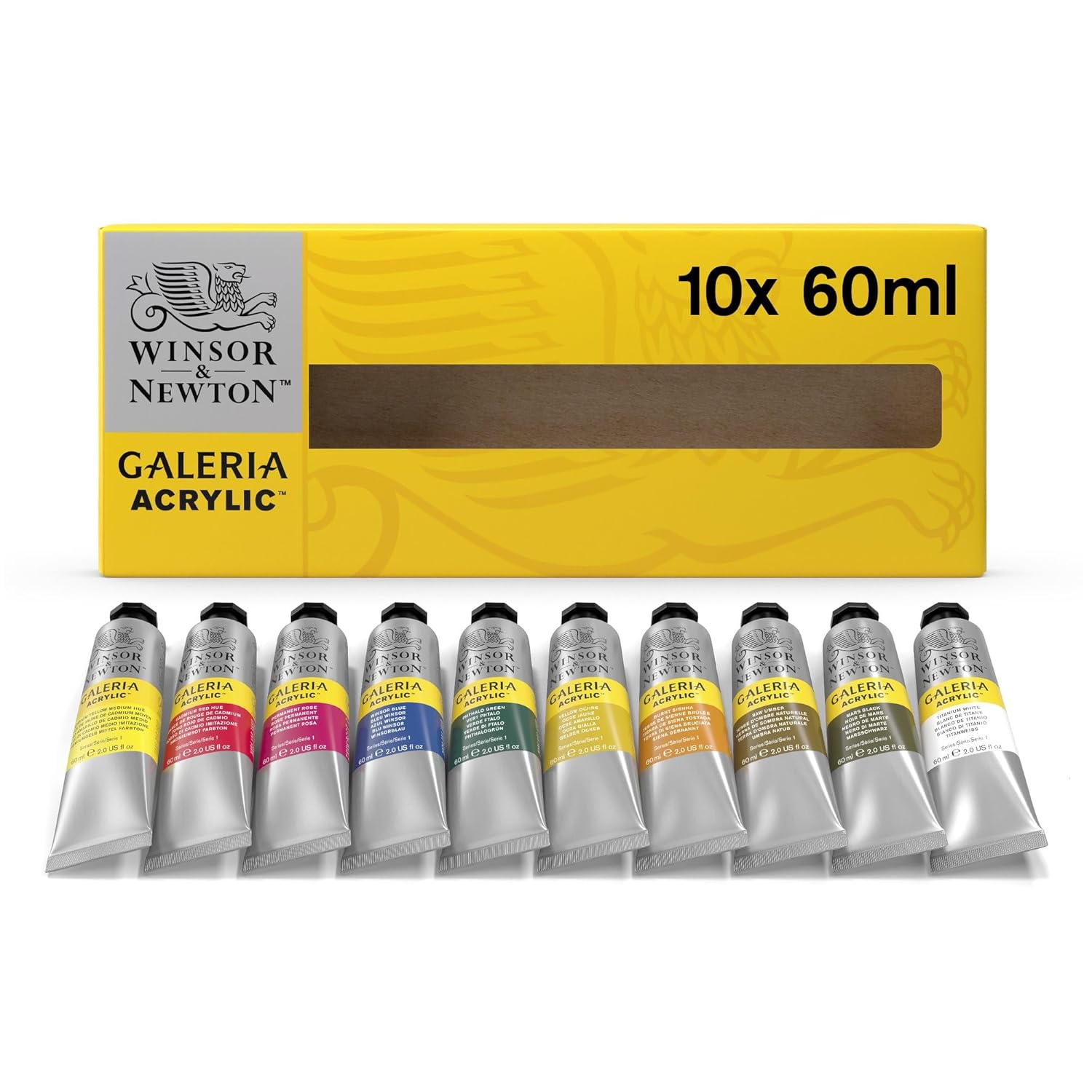
Here are the materials I recommend for you to make artwork like Yayoi Kusama. I generally suggest paying for quality products which will last longer and give you a better finish. Paint pens can last a long time but you will need different sized tips for different details. Why not try sculpting your own pumpkin with modelling clay!


What do you think of Yayoi Kusama’s artwork? How could you describe it? What themes can you see in the artworks? Let me know in the comments!
DOWNLOAD this page below, for free, as an Artist Research handout to use in your lesson. It includes all of the facts and images, and has questions for students to answer.

This is fascinating! I’ve seen little bits of information about her work before but never spent any time looking into it. Thank you!!! 👏👏👏👏👏
Glad you have found it interesting 😊 thanks for your comment!
I would really love to see her exhibition here in Manchester some day!!
Same!
Recently watched a documentary on her. Wow! Very powerful artist.
Art
Another great piece to use as an artist to study in my Pop Art & Patterns planning.
Thank you
You’re welcome! Thanks