Peer and self assessments; whole class evaluations; formative and summative assessments; teacher feedback; exit tickets; quick checks; verbal feedback… The list of ways for art students to receive feedback or evaluate their artwork can seem endless (and sometimes confusing) but these learning activities are critical for engaging and purposeful art lessons.
Without succinct feedback, time to reflect or evaluate their artwork, students can often miss (or forget) important elements of the lesson outcomes, or even not understand how to achieve them. Using a range of feedback activities in art lessons can help to ensure all students are on board with the lesson aims and how to achieve or exceed them.
Get art lesson resources straight to your email:
If you would like the presentation with all of these assessment for learning ideas, just leave a comment below and I will share it with you.
Reflecting on my teaching recently, I felt that I was stuck in a bit of an ‘assessment rut’ and was using the same WWW / EBI (What Went Well / Even Better If) feedback activities over and over again. This is where students identify successes and targets in each other’s work and can be an effective formative assessment tool and a good way to peer assess artwork – but! It often comes in the same repetitive format of students writing down feedback or giving it verbally.
So, since I am a loud and proud Teaching and Learning geek, I thought I would do a bit of research.
Here comes *some* of the science…

Peer assessment has been noted as a potential learning strategy for engaging students in knowledge construction and skill development via comprehending teachers’ assessment criteria, learning from viewing peers’ work, and making reflections.

Topping (1998) defined peer assessment as a learning strategy whereby students evaluate or comment on the value or the quality of the work or the learning outcomes of their peers who learned with the same learning content.
The objectives of conducting peer assessment activities are to improve the students’ learning outcomes, stimulate their higher order thinking (e.g., meta-cognitive awareness), and increase their autonomy. For example, several studies have reported that peer assessment activities are effective in terms of enhancing students’ autonomous learning ability. Moreover, the effect of engaging students in the role of a reviewer on their reflections has been pointed out. On the other hand, the benefit of receiving feedback from peers in improving students’ learning outcomes has also been reported. For instance, Nicolaidou (2013) found that students’ feedback could gradually become more comprehensive and correct by inspecting peers’ comments in the learning process.
Other researchers have also found that assessment training can result in a significant decrease in the discrepancy between student and instructor ratings of example projects; that is, the students’ meta-cognitive awareness might be improved.
Chiu-Lin Lai, Gwo-Jen Hwang,
https://doi.org/10.1016/j.compedu.2015.02.011.
(https://www.sciencedirect.com/science/article/pii/S0360131515000639)
I have shared a huge list of engaging art entry tasks, art lesson starters and art plenaries here. Enjoy!
Here I have collated a range of fun, creative formative and summative assessment activities that engage students and are designed to be more tailored to art lessons. These classroom assessment ideas are designed to empower your students and promote a positive learning environment – you do not want to demoralise anyone’s hard work! Finding assessment activities that are meaningful to you and your students is really important so try things out, change ideas, swap elements etc. and see what works best for you.
The art assessment ideas here are NOT all of my ideas, I have seen these in other lessons and found some online – I hope they are useful!
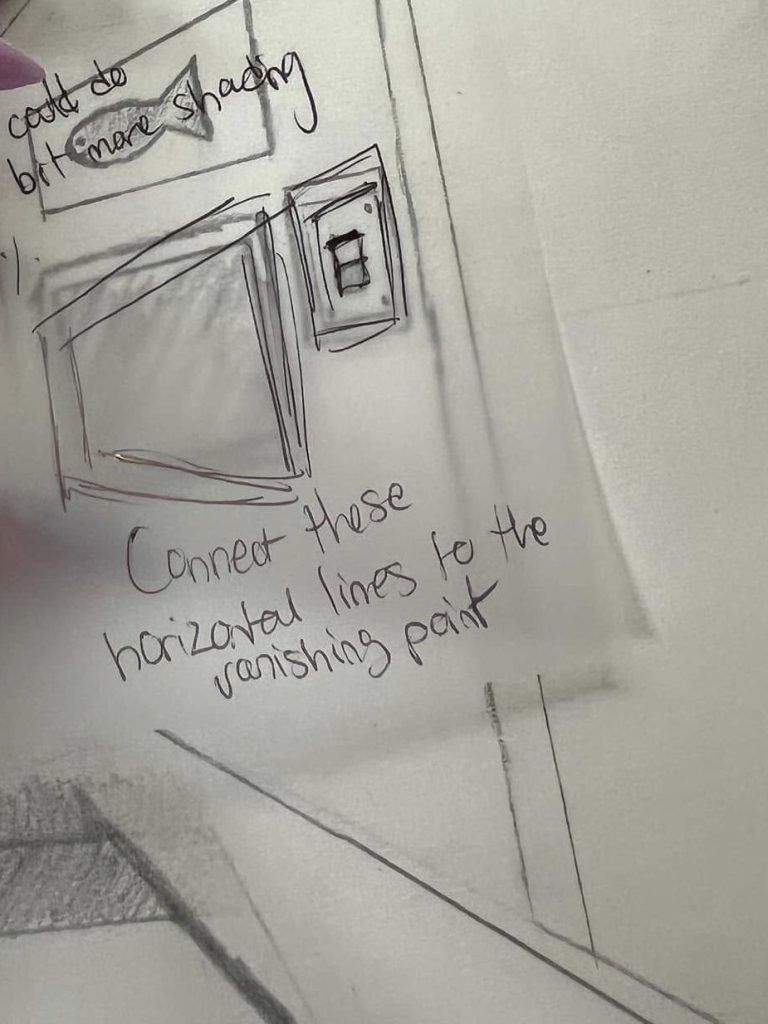
**UPDATE** I found this genius idea from one of the (very helpful) Facebook groups (High School Art Teachers) … Transparent Sticky Notes!
Why have transparent post it notes only just come into my life? I have no idea, but I do know that I absolutely love them. What a great way to show students how to improve their work, without actually changing it or needing to rub parts out.
Self assessment ideas for art lessons
- Fill your emoji face 😶
- Students are given a blank emoji face (included in the resources) and draw in the emoji which best reflects their work from the lesson. There is space on the handout for students to write a sentence explaining why they chose their emoji.
- This can easily be adapted to whichever project you are teaching, and you could guide students to make sure they use appropriate keywords in their sentences.

- Reflection Points Quiz 📈
- Students are given a guide (on the board) explaining how to earn points based on their work. Eg. You earn a point each time you have mixed a secondary colour. Students do some mental maths and add up their points total.
- I usually give prizes out for the top scores, or ask students to explain to the rest of the group how they earned their points. I have found this to be a great art plenary activity.
- Good / Better / Best 🔴 🟠 🟢
- Students evaluate their artwork and explain how they have made their work ‘Good’, ‘Better’ or ‘Best’. I usually have the lesson outcomes explaining how to reach the different stages and make sure students use appropriate keywords in their answers. Eg. My work is better because I have… My work is best because I have…
- This can be extended by asking other students to agree / disagree using thumbs up or down. This works well when students can explain their reasoning and use the appropriate lesson outcomes in their answers.
- This can all be verbal, written or you could choose different students from the class to feedback to the rest.
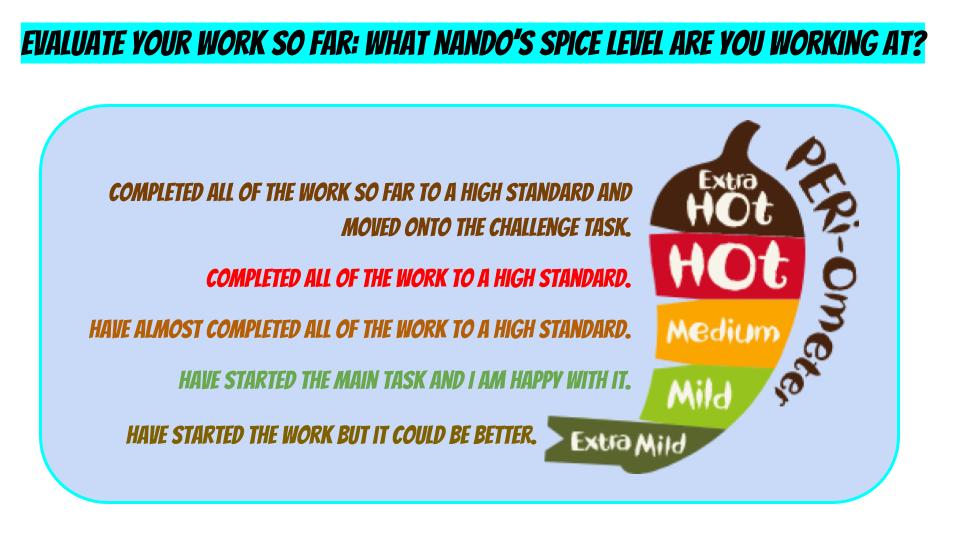
- Nando’s Spice Level Evaluation 🌶️
- This is the same as Good, Better and Best, but students use the Nando’s Spice Level instead! I have found this to be more engaging with my older art students.
Peer assessment activities for art lessons
- Speedy Feedback 🗣️💬
- Students have a small amount of set time (usually 2 minutes) to give their partner as much feedback as possible about their work. Explain that they should use the lesson outcomes and have to talk for the full amount of time.
- After half the time has passed, students swap and the other person talks. I love this as a plenary activity in art as it really makes the students think quickly on the spot! It is great if you have a few minutes at the end of the lesson spare too. 😆

- Points Quiz 📈
- This is exactly the same as the points quiz plenary above except students swap work and award each other points. At the end of the activity they explain to each other how they earned their points.
- Usually I will hold up one or two pieces of work at the end and have the student explain how they reached X amount of points. Prizes for the top three points scores is always a bonus!
- Head Heart Bin Bag 🧠 💚 🗑️ 🎒
- I have mostly used this activity at the end of an art project as it is a really good exercise for students to reflect on all of their work throughout, rather than just one lesson or one piece of work. Students have to choose either Head (something that has made them think), Heart (something they have felt / an emotion), Bin (something they did not enjoy) or Bag (something they will remember to use in future).
- After some thinking time I ask the students to feedback to the rest of the group. I love this reflective activity because students always think of things I wouldn’t have considered!

- 2 Stars 1 Wish ⭐ ⭐ 🎈
- This is a really simple evaluation technique that is great for an art classroom as it makes sure students really look at each other’s work. Students write down two things they like about their peer’s artwork, then one thing they want them to work on or improve.
Whole class assessment ideas for art lessons
- Secret Superstar 🤐 🌟
- This is a really fun activity that is completely student-led and a lovely way to finish off a lesson. Assign one student with a ‘secret job‘ to find the class superstar. I usually give this job to students who thrive off doing jobs around the classroom or need a bit of time away from their desk.
- Explain that they will choose a Secret Superstar from the class and they will feedback to the rest of the group why they chose them at the end. Give them tips such as working hard all lesson / producing excellent work / being independent / helping other students etc. If the rest of the class agree with the chosen Secret Superstar, there are rewards for both students.
- The student can subtly move around the room looking at other students working throughout the lesson.
- At the end of the lesson, tell the class what has been happening and ask the first student to explain why and how they chose their Secret Superstar.
- Keyword Bingo 🙋♀️ 🙋♂️
- Fill out the blank Bingo sheet (included in the presentation) with keywords from your project. The rest is easy and fun – play Bingo! Prizes for the winners is always a good idea too.
- Gallery Wall 🖼️ 🖼️ 🖼️
- I have used this before with my GCSE art classes and had good outcomes and discussions from students, but of course give it a go with any of your classes. Simply ask students to blutack their work to a wall and host a group ‘crit’ or discussion. Asking students to write their thoughts on Post-It notes is a good idea too.
- I tried this and had students write their own name first so there were no silly answers 🙂
- Thanks to @MissLyleArt on Twitter for this suggestion!
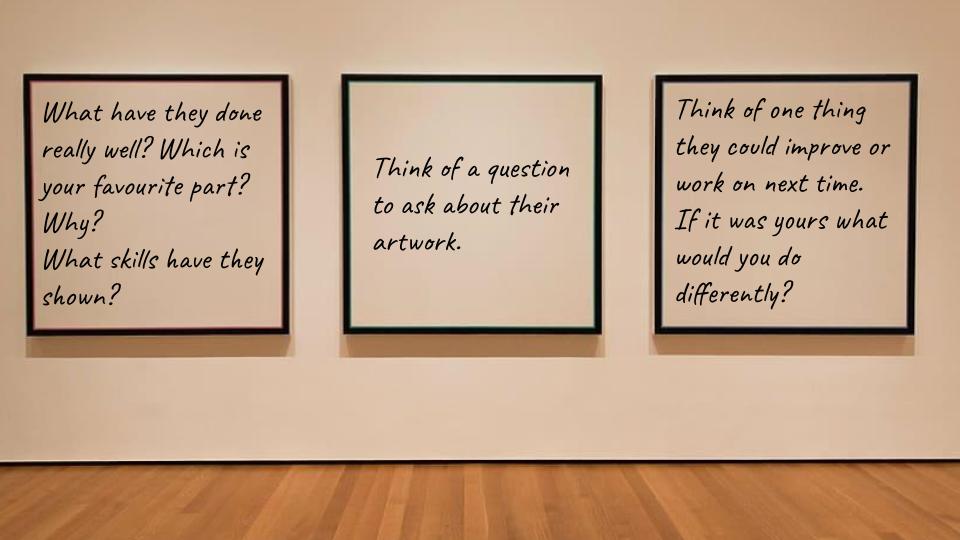
- Good Better Best 🔴 🟠 🟢
- Same as above except students evaluate pieces of artwork shown at the front of the classroom.
- Students explain how the other student has met ‘Good’, ‘Better’ or ‘Best’. I usually have the lesson outcomes explaining how to reach the different stages and make sure students use appropriate keywords in their answers. Eg. Their work is better because they have… Their work is best because they have…
- This can be extended by asking other students to agree / disagree using thumbs up or down. This works well when students can explain their reasoning and use the appropriate lesson outcomes in their answers.
I have shared a huge list of engaging art entry tasks, art starters and art plenaries here. Enjoy!
These art assessment ideas are ones I have used myself and have found them to be effective in my classroom. If you would like a copy of the presentation which includes all of the slides and ideas, just leave a comment below so I can share it with you.
If you have any other fun art assessment ideas, or have tried any of these out already, I would love to see how they turned out – here’s my Instagram.


Awesome! This is so helpful to a 2nd year art teacher. Thank you for sharing!!
LikeLike
Glad to hear these are helpful! I just shared the presentation.
LikeLike
Hello! I just came across your post and would love to have your presentation to use in Art Class.
Thank-you!
LikeLike
No problem 🙂 I just sent it over.
LikeLike
Could I have a copy of these AifL ideas please? They look great.
LikeLike
Yes, I have just shared them 🙂
LikeLike
Love all these ideas for AFL. Thank you for sharing.
LikeLike
You’re welcome! Hope they help out.
LikeLike
These were helpful. It’s an area I struggle to include students. Any ideas are appreciated! Thanks!
LikeLike
I’m so glad they were helpful. Assessment can be really tricky in art lessons. I have just shared the full presentation with you – hope it helps.
LikeLike
Thank you so much! Could I have the presentation please?
LikeLike
You’re welcome! I have sent it over to you – hope it helps 🙂
LikeLike
I LOVE these assessment ideas! Can I also have the presentation PLEASE?!
LikeLike
Thank you! I’m so glad they’re useful for other art teachers 🙂 I’ve just shared it for you.
LikeLike
Great ideas and I will certainly be using them. I would love the presentation. Thank you!
LikeLike
Thanks, that’s great to hear 🙂 I just sent them over.
LikeLike
Please could i have the presentation.
Thank you 🙂
LikeLike
Sent!
LikeLike
Thanks for what you do. I would love a copy.
LikeLike
Thank you 🙂 I have just shared it, I hope it helps.
LikeLike
Hi would love a copy of your assessment ideas. Some different ones that I like. Thank you
LikeLike
No problem, I just shared it. Glad you like the look of some!
LikeLike
hi, please can you send me a copy?
Thank you for sharing your ideas 🙂
LikeLike
You’re welcome! I have just shared the presentation 🙂
LikeLike
Great assessment ideas to use with my students. Please could you share the presentation.
LikeLike
Thanks! I just shared it for you 🙂
LikeLike
Thank you for sharing these ideas! I would love to see the presentation, thank you.
LikeLike
You’re welcome 🙂 I have just sent it over for you, enjoy.
LikeLike